You probably know that words like chakra or namaste come from Sanskrit. But Sanskrit isn’t just an ancient language preserved in historical scriptures. It’s a living current of sound, carried through the body as vibration. It’s built from about fifty root sounds, each with its own shape and feeling in the body.
When spoken clearly, these sounds form in five specific places: the throat, the soft palate, the hard palate, the teeth, and the lips. That’s what gives the language its energetic texture. Sanskrit isn’t only meant to be read. It’s meant to be felt—musical, physical, and alive.
Now, Sanskrit pronunciation is its own kind of art, and I’m not a Sanskrit scholar, not by a long shot. But I do want to share a handful of essential sounds that are simple to use and rich with meaning. These are known as bīja mantras. The word bīja means “seed.” Each syllable is like a small, potent vibration that helps bring a certain quality of awareness to life.
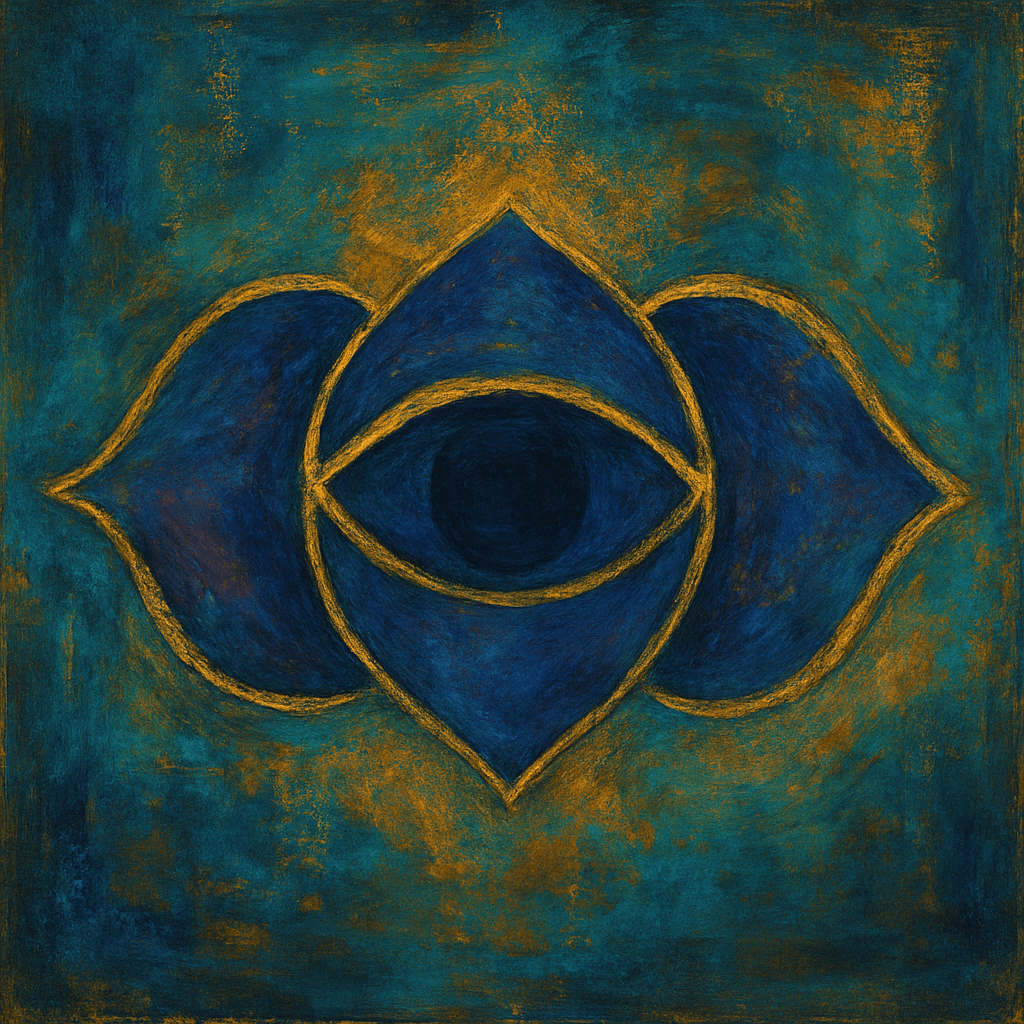
At the base of the spine, there is LAM, the sound of earth: steady, grounding, and strong. Just below the navel, VAM carries the feeling of water—fluid, emotional, and adaptable. Above that, in the solar plexus, RAM holds the fire: confidence, will, and transformation. At the heart center, YAM opens the space of air, where compassion and balance live. In the throat, HAM brings the resonance of space itself—truth, expression, and communication. And at the brow, the third eye, there is OM: the sound of light, of pure awareness.
When we chant, or even repeat these sounds silently, we begin to tune the body like an instrument. The vibration rises from the solid ground of the earth toward the subtle clarity of consciousness.
You’ve likely heard the phrase Haṭha Yoga, often translated as “the yoga of balance.” But the word itself has a deeper root. Ha means the sun, and Tha means the moon. These two syllables refer to the main energetic forces that move through the body. One is active and outward-moving, warm and bright. The other is quiet, cool, and inward. Together, they speak to the dance of opposites that runs through our lives.
So Haṭha Yoga becomes the practice of bringing those energies into relationship. Every pose, every breath, every moment of stillness is part of that balancing. And when it happens, something inside settles. The body finds its center. The mind begins to rest.
In deeper meditation, the solar and lunar energies are said to rise and meet at the center of the forehead—the Ājñā chakra. There, they take the form of two subtle sounds: Haṁ, which carries the breath of awareness outward, and Kṣaṁ, which draws it back in. When these two meet, they dissolve into OM, the sound of unity and stillness, of awareness resting in itself.
So we might say that Haṭha Yoga is the path—the work of balance—and Haṁ–Kṣaṁ is the arrival, when balance becomes real and awareness recognizes itself.
These seed mantras are not just ideas. They are openings. Each sound touches a layer of the self, from the weight of earth to the quiet of space, and finally to the light of inner awareness. In this way, they mark a passage, from motion into stillness, from sound into silence.
Yoga, then, is not something we perform. It’s something we remember. The vibration that runs through the world is the same one that lives quietly within us.
There’s a line from the teacher Ādi Śaṅkarācārya that speaks to this truth: Brahma satyaṁ jaganmithyā jīvo brahmaiva nāparaḥ. In short, “The Absolute alone is real. The world is a passing appearance. The individual self is none other than that Absolute.”
So when we move or breathe or chant, we aren’t reaching for something outside ourselves. We’re tuning back to what’s already true. The light and the sound we’ve been looking for are already here, already within.
 PJ Davenport | Storytelling & Transformation—On & Off the Mat
Leave a comment